
Upgrade Labs 5th Street Panel Insights
Hello biohackers, we’re back with another fresh, no-fluff insight—baked and served straight from the real-world trenches of wellness entrepreneurship.
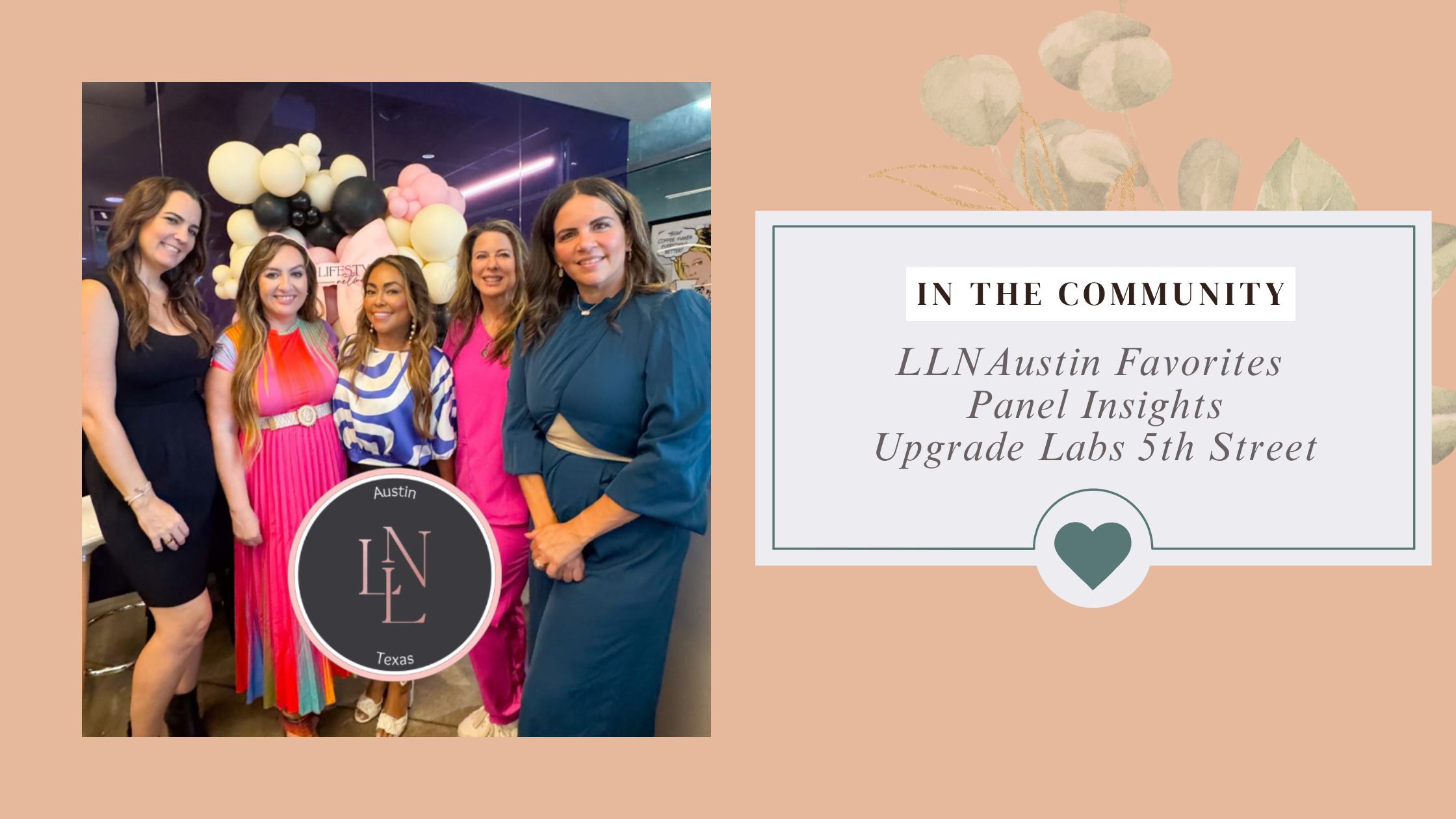
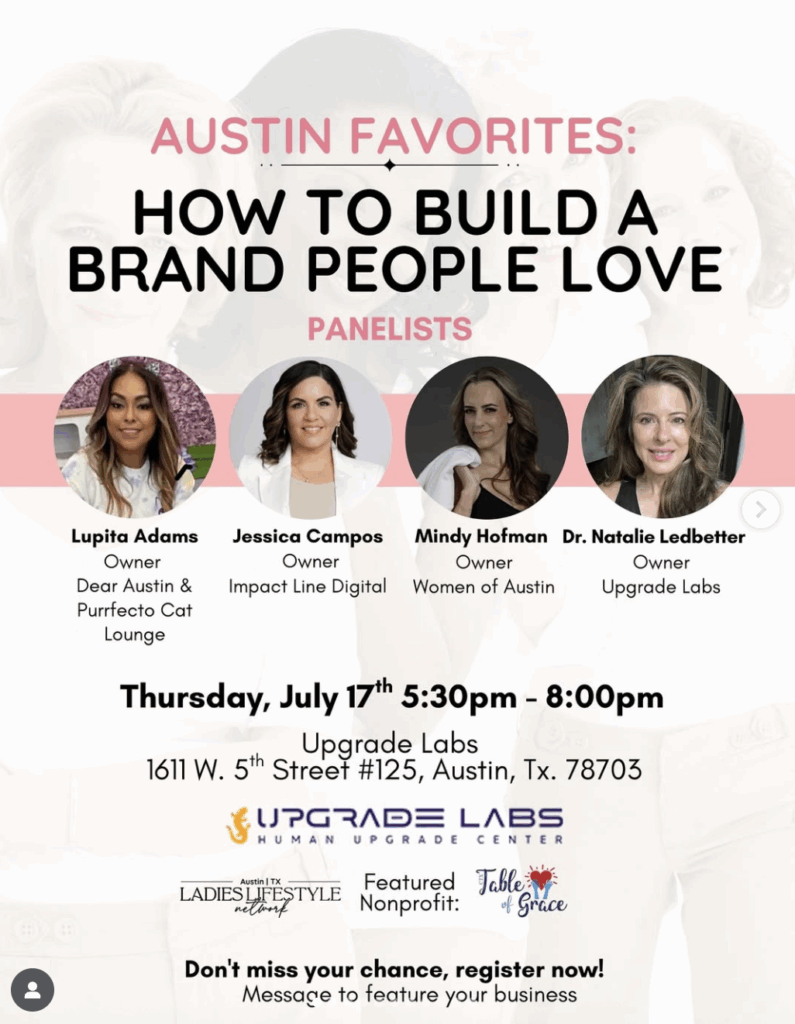
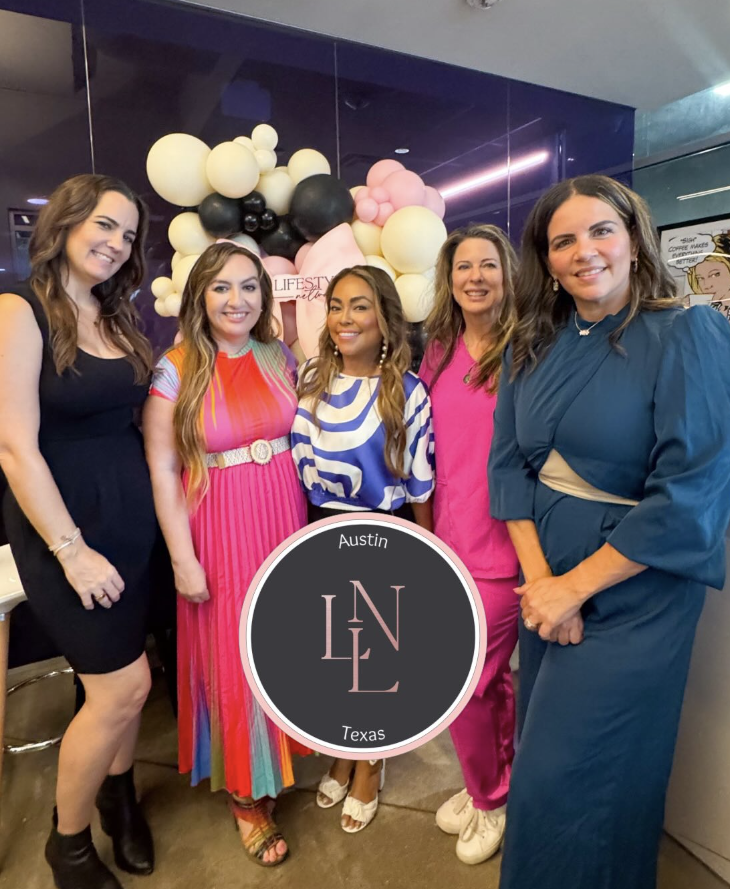
As a CMO—Chief Momentum Officer—I love when I get to share my story and lessons – especially with women in business. I recently had the opportunity to speak on a branding panel hosted by the Ladies Lifestyle Network at Upgrade Labs (Austin, TX)—an inspiring evening filled with meaningful conversation about visibility, identity, and business growth. I was honored to share the stage with three incredible women in business: Lupita Adams, Mindy Hofman, and Dr. Natalie Ledbetter. Apparently, we’ve been dubbed “Austin Favorites”—and after that night, I can see why.
We had a full house—creators, coaches, clinic owners, practitioners—all trying to decode the same thing:
“How do I grow a brand that gets seen, respected, and remembered… without selling out or getting stuck doing what everyone else is doing online?”
It was the kind of conversation I wish more people were having. Because behind every messy content calendar or inconsistent feed is usually a deeper problem: brand confusion.
Before we dive in, I want to give a big shout out to Jessica Cherry, the powerhouse producer behind the Ladies Lifestyle Network Community.
Your vision, energy, and seamless coordination created a space where founders, thought leaders, and creators could have real, meaningful conversations about brand identity and business growth.
Thank you for curating not just an event—but an experience that truly moved the Austin wellness community forward. Honored to have been part of it.
What Branding Actually Is (And Isn’t)
During the panel, I was asked how I define branding. My answer was simple:
Brand is how people talk about you when you’re not in the room.
Branding is how you shape that conversation.
We often use “brand” to mean colors, fonts, logo, or the latest Canva template. But that is design.
Developing a brand it’s intentional storytelling, strategic positioning, and consistent messaging over time.
The Invisible Audience: Who Are You Really Talking To?
Another question that came up was: How did you figure out who your ideal customer is—and how to reach them?
My answer?
Think outside the algorithm.
Social media can help with reach, yes. But the people who make decisions—like investors, clinic owners, or licensed professionals—aren’t always scrolling Reels or dancing on TikTok.
You have to know how your audience behaves online. A medical professional may never comment on your Reel—but might bookmark your carousel and email it to their partner.
Your platform must meet your audience where they are—not just where the trend is.
My Hardest Lesson in Brand Strategy
Chasing a look and identity based on someone else’s path instead of mine.
That’s the truth.
I’ve been there—caught in the FOMO loop, thinking, “Maybe if I just make my brand look more like hers, I’ll grow faster.” But when you create from a place of lack, you end up wasting your most valuable resource: time.
I’ve learned that the real momentum happens when I take the guardrails off and lean fully into servant leadership.
I focus on adding value.
I build community.
And as a result, people talk about the work I do.
That’s the power of brand: when your impact speaks for itself—even when you’re not in the room.
You Can’t Build a Premium Brand on a Dollar Store Strategy
One of the most memorable moments during the panel was when we talked about prestige.
I explained it like this: you can choose to be Walmart, or you can choose to be Nordstrom.
Neither is wrong. Both are successful.
But they don’t operate under the same expectations—and they definitely don’t use the same branding strategies.
Walmart focuses on convenience and affordability.
Nordstrom is built on experience and elevated service.
What’s key is this: prestige isn’t just about price—it’s about perception.
If you want to position your brand as premium, your messaging, visuals, language, and customer experience must align with that decision. Otherwise, your audience will feel a gap between what you say and how you show up.
So when someone asked how to increase visibility without a big budget, my answer was simple:
Get visible in rooms where your brand makes sense—and make sure your message reinforces the value you want to be known for.
And don’t be afraid of creating THE ROOM.
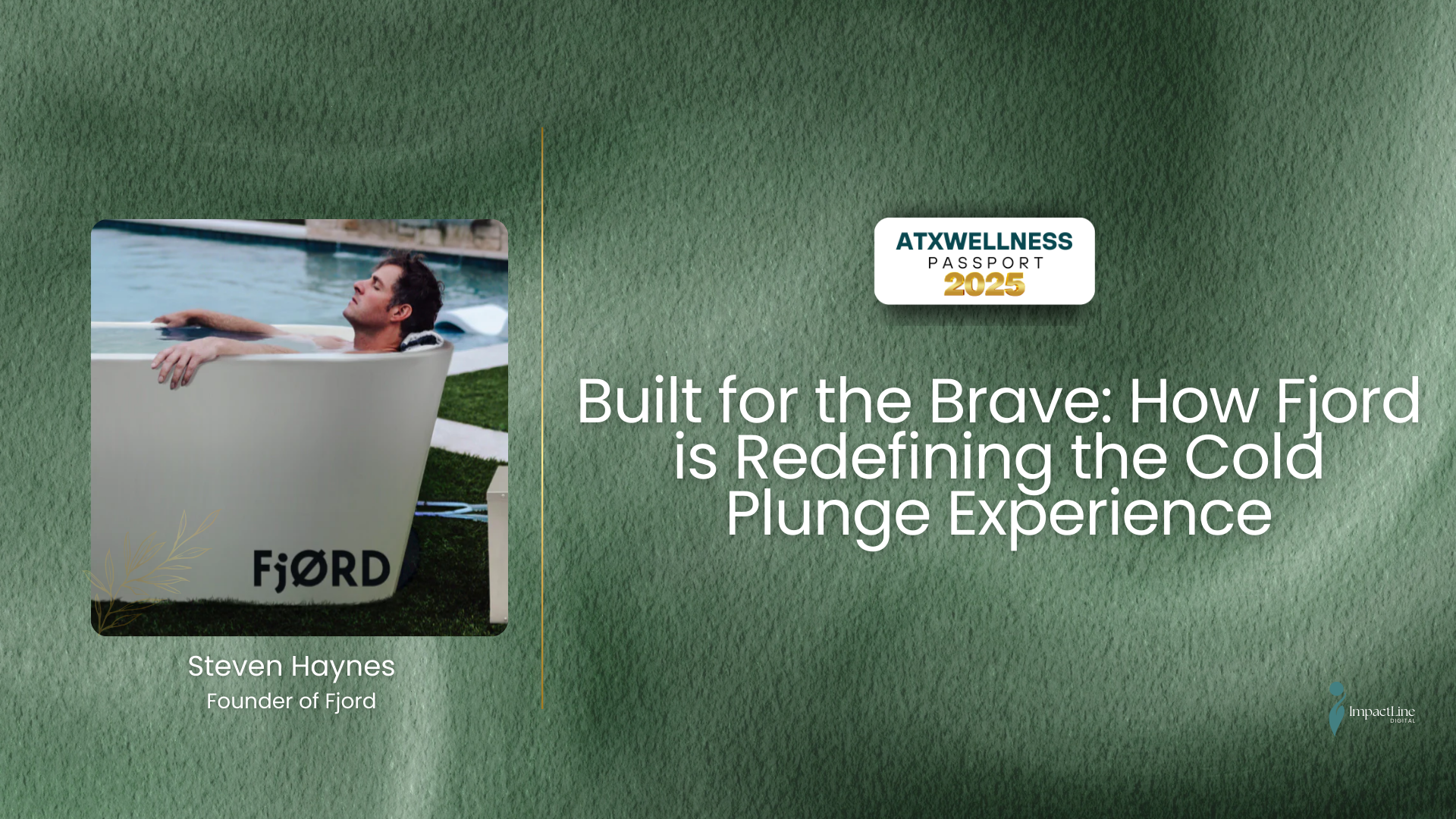
A great example of this in action is the ATX Wellness Passport, a community initiative I organized to spotlight top recommended health and wellness businesses in Austin.
The Passport is a digital publication. But passport holders are part of a list.
Check out our latest event! We simply launched an invite within our Wellness Passport members … And this happened!
Content Without Brand Identity Is Just Noise
Here’s where I introduced the 4 Brand Models Quadrants—my framework to help founders figure out how to show up online based on what they’re building.
Because this is where a lot of entrepreneurs go wrong:
- You’re a thought leader, but your posts look like an influencer’s feed.
- You’re building a product brand, but your content is built around your lifestyle.
- You want to scale, but your strategy depends entirely on your face and presence.
Here’s how to fix that.
The 4 Brand Models Quadrants
Each brand model requires its own content strategy. Knowing which lane you’re in will sharpen your messaging and prevent you from burning out doing the wrong things.
Business Brand
Structured to scale. Think systems, teams, service delivery.
Best for: clinics, service businesses, franchises
Your content: authority, team process, transformation
Avoid: founder-centric content that can’t scale
Creator Brand
Built on personality. Monetizes attention and community.
Best for: authors, influencers, educators
Your content: lifestyle, behind-the-scenes, emotional connection
Avoid: sounding too corporate or detached
Industry Leader Brand
Built on expertise and frameworks. Values trust over trends.
Best for: consultants, therapists, experts
Your content: education, systems, case studies
Avoid: content that dilutes your authority (trending audios, low-value Reels)
Icon Brand
Visionary. Culture-defining. Disruptive.
Best for: movement builders, founders with a mission
Your content: brand storytelling, bold messaging, community engagement
Avoid: content that plays it safe or lacks emotional tension
So, What Should You Post?
Before you hit publish on your next Reel, carousel, or newsletter—ask yourself:
- Am I aligned with the brand I’m building, or mimicking someone else’s?
- Does my content elevate trust, or just chase visibility?
- Will this content still make sense six months from now?
Final Thought: Align Before You Amplify
If you’re serious about building a brand that lasts, your content must align with your model—not with someone else’s algorithm.
Don’t post like an influencer if you’re building a thought leadership brand.
Don’t post like a creator if you’re launching a scalable business.
Don’t adopt content habits that don’t fit your business structure.
Clarity before consistency. That’s how real brands grow.
Ready to align your brand with the business you’re actually building?
At ImpactLine Digital, we help founders clarify their brand model, design strategic content, and build momentum that converts.

No Comments